
How to Calculate Gold Jewellery Price in India (2026)
 A P Jewellers
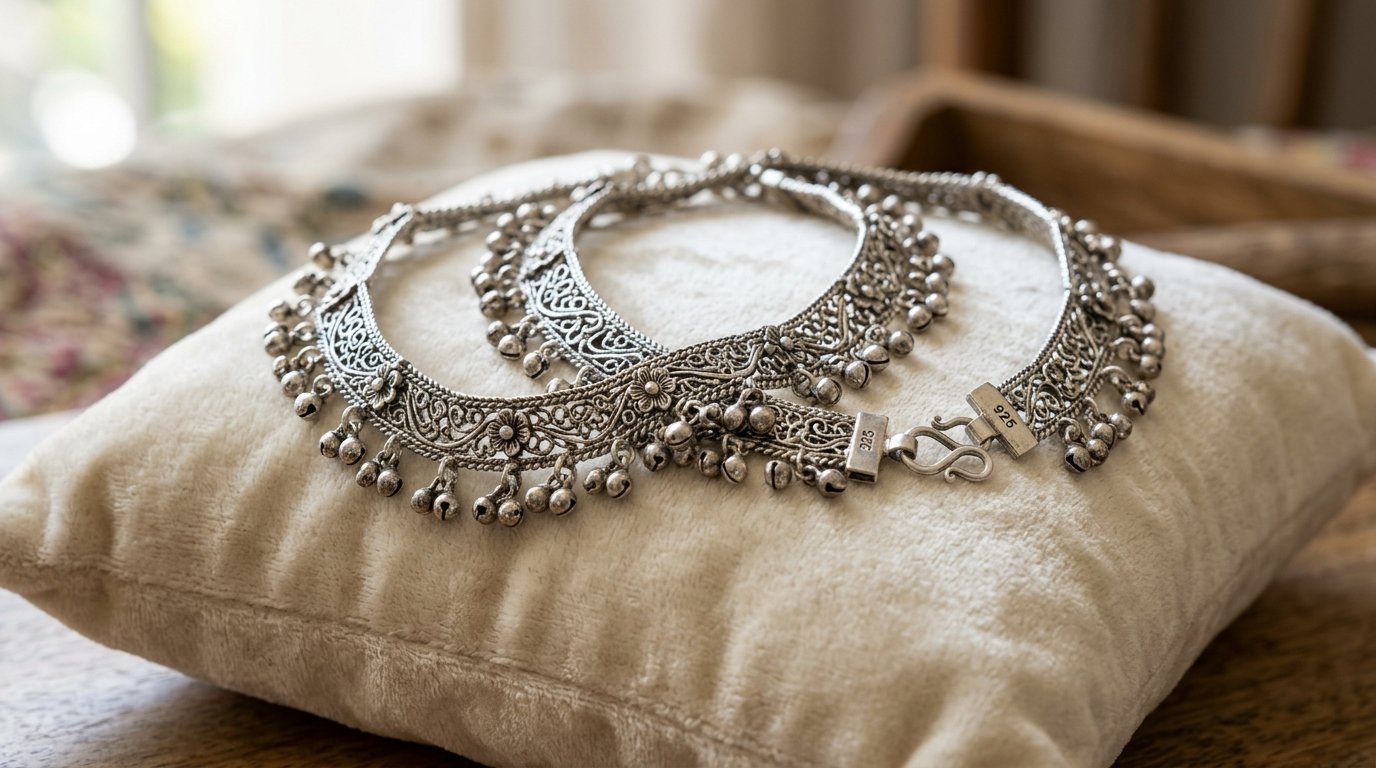
Two ornaments can have the same gold weight and still carry very different final prices. The reason is simple: the daily metal rate is only one line of the bill. Design labour, stone value, other stated charges and tax also matter. The safest way to compare jewellery is to rebuild the quotation line by line—not to compare only the rate per gram.
Gold jewellery price formula in India
For a plain gold ornament, begin with the metal value. For a stone-set ornament, keep the gold and stone calculations separate. A practical formula is:
Final price = Metal value + Making charges + Stone/other disclosed value + GST
Metal value = Net gold weight × Rate per gram for the same purity
This wording—for the same purity—is important. Multiplying an 18K ornament by a 24K rate overstates the gold value. Equally, multiplying a 22K ornament by an 18K rate understates it. Ask which purity the displayed rate represents before doing the calculation.
Plain gold jewellery
Usually contains only gold alloy and small functional components. The comparison is mainly rate, net weight, making method and GST.
Studded jewellery
May contain diamonds, gemstones, enamel, beads or other material. Check the net precious-metal weight and the separate stone description/value.
Gross weight, net gold weight and stone weight
The scale may show the weight of the entire ornament. That is the gross weight. The amount of precious metal used for the gold-value calculation is the net gold weight. In stone-set jewellery, these numbers should not be treated as interchangeable.
| Term | What it includes | Why it matters |
|---|---|---|
| Gross weight | The complete article: metal, stones and other attached materials. | Useful for physical handling and identification, but not automatically the billable gold weight. |
| Net precious-metal weight | The weight attributed to the gold alloy after other materials are excluded. | This is the weight that should align with the metal-value calculation. |
| Stone/other weight | Diamonds, coloured stones, beads or non-metal decorative parts. | Check how these items are described, valued and treated under the exchange policy. |
The latest BIS jeweller guidelines require a bill for hallmarked precious-metal articles to state the description of each article, net precious-metal weight, purity in carat and fineness, and hallmarking charges. That makes the invoice more than a payment receipt: it is the record you may need for service, exchange, insurance or a purity complaint.
Step 1: match the gold rate to the ornament's purity
Jewellery is commonly sold in purities such as 22K916, 18K750 and 14K585. If the showroom quotes a rate for that exact purity, use it directly. If you are doing an approximate planning exercise from a 24K reference rate, convert the rate before multiplying by the net weight:
- 22K planning rate: 24K reference rate × 22 ÷ 24 (or use the declared 916 fineness for a 91.6% estimate).
- 18K planning rate: 24K reference rate × 18 ÷ 24.
- 14K planning rate: 24K reference rate × 14 ÷ 24.
For the current local display rate, see A P Jewellers' gold and silver rate page for Prantij, then confirm the exact billing rate before placing the order.
Step 2: identify how making charges are applied
Making charges pay for design development, fabrication, setting, finishing, polishing and quality control. A plain machine-made chain and a detailed handcrafted bridal piece should not be expected to carry the same workmanship cost. The number is normally expressed in one of these ways:
| Method | Calculation | Question to ask |
|---|---|---|
| Percentage of metal value | Metal value × making percentage | Is the percentage applied to net metal value only? |
| Rate per gram | Applicable weight × labour rate per gram | Which weight is used: net metal weight or another stated weight? |
| Fixed amount | A stated labour price for that design | Does the amount include setting and finishing? |
A lower making percentage is not automatically the better deal. One quotation may use a higher gold rate but a lower making charge; another may do the reverse. Compare the pre-tax total for the same purity, net weight and stone specifications.
For a deeper explanation, use the site's making-charges estimator and guide.
Step 3: calculate GST correctly
CBIC's jewellery-sector FAQ says GST is payable at 3% of the total transaction value of jewellery, whether the making charge is shown separately or not. That means the safe consumer calculation is:
GST = 3% × (metal value + making charges + taxable stone/other value included in the jewellery transaction)
Worked example: reconstructing a gold-jewellery quotation
The values below are deliberately illustrative, not today's market rates. Replace them with the quotation you receive.
- Net gold weight: 10.000 g of 22K jewellery.
- Quoted 22K rate: ₹R per gram. Metal value = 10 × R.
- Making charge: 10% of metal value. Making = (10 × R) × 10%.
- Stone value: ₹S, if the article is studded; use zero for a plain ornament.
- Pre-tax transaction value: (10 × R) + making + S.
- GST: pre-tax value × 3%.
- Estimated invoice total: pre-tax value + GST.
This algebraic example does not become stale when gold rates change. It also prevents a false sense of precision: the exact total still depends on the selected piece, verified weight, rate at billing and disclosed charges.
Gold jewellery planning calculator
Enter the rate for the same purity as the ornament. This is an educational estimate, not a quotation.
- Metal value
- ₹0.00
- Making charges
- ₹0.00
- Pre-tax value
- ₹0.00
- GST at 3%
- ₹0.00
- Estimated total
- ₹0.00
What a useful jewellery invoice should let you verify
Before leaving the showroom, read the invoice while the selected article is still in front of you. Check these fields against the product and quotation:
- Jeweller's legal name, address, invoice number and date.
- Clear article description—for example, ring, chain, bangles or necklace set.
- Purity in karat and fineness, such as 22K916 or 18K750.
- Gross weight and, especially for studded pieces, net precious-metal weight.
- Rate per gram used and the metal-value calculation.
- Making charge method and amount.
- Stone type, weight/quantity and value where applicable.
- Hallmark/HUID-related details and hallmarking charge as applicable.
- Taxable value, GST breakup and final payable amount.
- Exchange, buyback, repair and cancellation terms—preferably on the invoice or attached policy.
Use the official BIS Care app's Verify HUID feature to compare the HUID information with the article. Do not rely only on a screenshot supplied by someone else; enter the code yourself.
How to compare two jewellery quotations fairly
- Choose the same design category and similar construction.
- Match purity: compare 22K with 22K, not 22K with 18K.
- Normalize the net gold weight or calculate the price per net gram.
- Keep natural diamonds, laboratory-grown diamonds and imitation stones in separate comparisons.
- Compare the full pre-tax amount, then verify the same GST treatment.
- Read the exchange/buyback policy; a small price difference today may be less important than unclear future terms.
Frequently asked questions
Is GST charged on gold value or on the complete jewellery price?
For a normal finished-jewellery sale, CBIC states that GST is 3% of the total transaction value, whether making charges are shown separately or not.
Should I calculate gold value using gross weight?
Not automatically. Gross weight can include stones or other non-gold parts. Use the net precious-metal weight stated for the article and ask for a clear weight breakup.
How do I calculate 22K jewellery from a 24K rate?
For rough planning, multiply the 24K reference rate by 22/24, or use the stated 916 fineness where appropriate. For billing, use the jeweller's clearly quoted 22K rate and confirm the rate-validity time.
Are making charges refundable when jewellery is exchanged later?
Making charges pay for craftsmanship at purchase and are generally not part of the recoverable metal value. The exact exchange benefit depends on the written policy, so ask before buying.
Does a lower making charge always mean a lower final price?
No. The gold rate, net weight, stone value and other charges can change the total. Compare a complete line-by-line quotation for equivalent articles.
What if the HUID details do not match my jewellery?
Pause the purchase and ask the jeweller to reconcile the mismatch. You can also use BIS consumer channels or a recognized Assaying and Hallmarking Centre for further verification.
Can an online calculator give my exact jewellery price?
No. It can rebuild a quotation from the values you enter, but the final price depends on the actual piece, verified weight, billing-time rate, making work, stones, taxes and store policy.
Want a line-by-line quotation for a design?
Note the design code and expected weight range. The A P Jewellers team can confirm current availability and explain the rate, purity, making method and final estimate before your showroom visit.
WhatsApp Gold Desk Browse gold designs- CBIC sectoral GST FAQ—jewellery GST treatment.
- BIS Guidelines for Jewellers, July 2026—invoice, display, weighing and HUID requirements.
- BIS Care app information—official Verify HUID feature.
Reviewed 31 August 2026. Tax rules and BIS procedures can change; verify current official guidance and your final tax invoice.
Coordinate Custom Ornaments
Have questions about gold purities, bis certifications, or design rates discussed in this article? Chat with our experts directly.