Old Gold Exchange in India: Value, Test & Deductions
 A P Jewellers
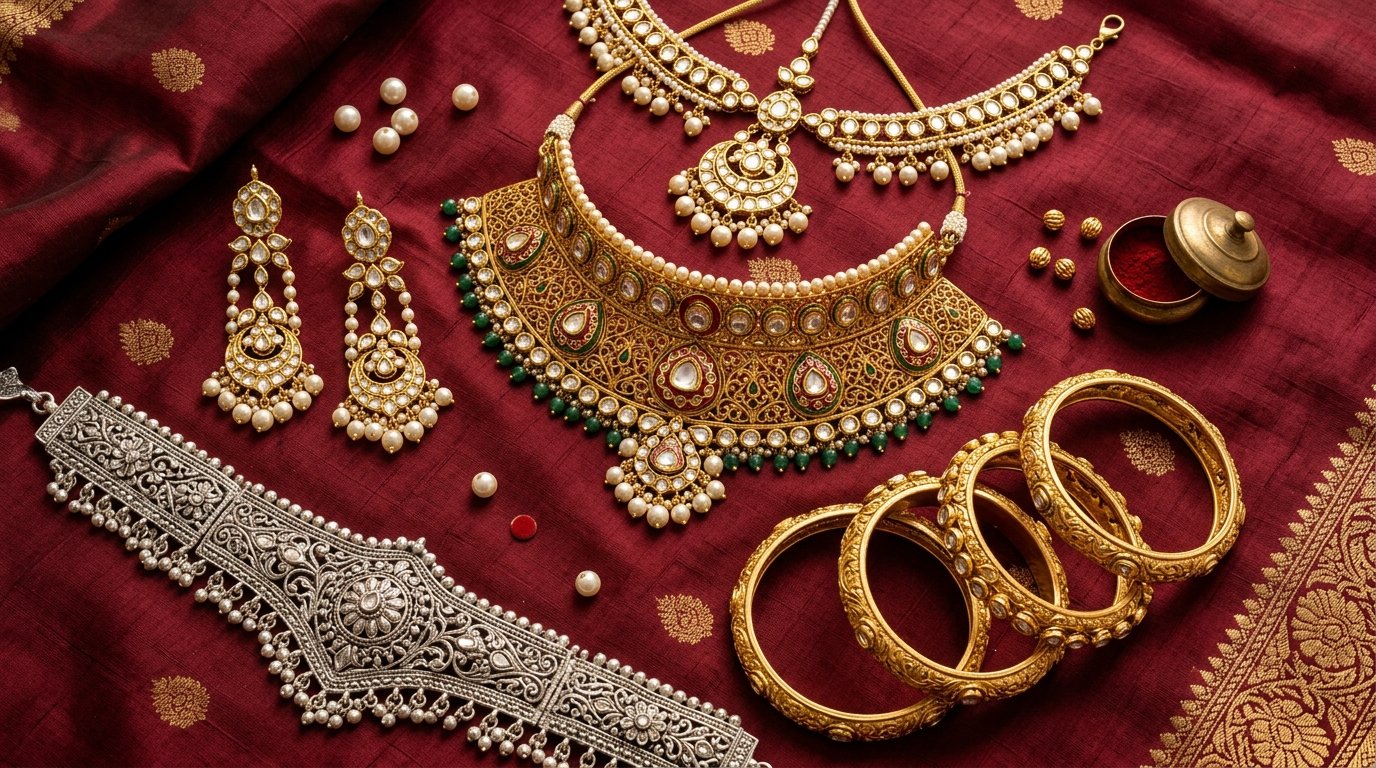
An old chain may say 22K916 on the clasp, but its exchange value is not calculated from that stamp alone. The evaluator also needs the actual precious-metal weight, tested fineness, reference buying rate and written policy for stones, solder, melting or refining. Understanding that sequence helps you judge an offer without turning a family ornament into a rushed decision.
First decide what outcome you actually need
Exchange
The value is credited toward new jewellery under the jeweller's exchange policy. Compare both sides: the old-gold credit and the full new-jewellery quotation.
Outright sale
You receive money and permanently give up the metal. Ask whether the buying rate or deductions differ from an exchange transaction.
Repair or redesign
Suitable when the emotional value matters and the piece can be restored or remade. Get a feasibility and loss estimate before authorizing work.
Gold loan
The jewellery is pledged rather than sold. This is a financial product with interest, valuation and repayment conditions—not an exchange shortcut.
If the ornament is inherited, photograph it and discuss the decision with relevant family members first. Once an article is cut or melted, the original form cannot be restored.
How an old-gold evaluation usually works
- Item identification: The jeweller records the article type, visible hallmark, condition and whether it contains stones, lac, enamel, thread, springs or other parts.
- Gross weighing: The complete article is weighed in your presence. Ask to see the stable reading and unit.
- Non-gold assessment: Stones and components that do not form part of recoverable gold are identified. Ask whether they will be returned.
- Purity screening: A non-destructive or minimally invasive method may provide an initial fineness estimate.
- Final test, if required: Melting or a destructive assay may be proposed where policy requires a more representative result. Consent should come before alteration.
- Rate and value calculation: The tested purity and eligible metal weight are applied to the stated buying/reference rate.
- Deductions and final offer: Each deduction should be shown as a rate, percentage or rupee amount—not hidden inside one unexplained total.
XRF, touchstone and melting: what each purity test can tell you
| Method | What happens | Useful limitation to understand |
|---|---|---|
| XRF screening | An instrument analyzes elemental composition without melting the ornament. | Fast and non-destructive, but the reading is mainly from the tested area/surface and may not represent every solder joint or mixed component. |
| Touchstone/acid | A streak from the article is compared through chemical reaction. | Useful for preliminary comparison; it is operator-dependent and not a complete analysis of the whole ornament. |
| Melting and homogeneous sample | The article is melted so the metal becomes a more uniform lot before final measurement/testing. | Irreversible. Stones and non-metal parts must be addressed, and process loss or refining terms should be explained beforehand. |
| Recognized assay testing | A qualified Assaying and Hallmarking Centre tests the submitted sample/article under the applicable process. | Ask whether testing is destructive, what report is issued, the fee and how remnants are handled. |
BIS says consumers can get jewellery or a sample tested at a BIS-recognized Assaying and Hallmarking Centre. This can be useful when you want an independent purity check before deciding where or whether to exchange.
Old gold exchange value formula
If you have a 24K reference rate, a transparent planning formula is:
Indicative metal value = Eligible net weight × (tested fineness ÷ 1000) × 24K reference rate
For example, use 0.916 for 916 fineness and 0.750 for 750 fineness. If the jeweller has already quoted a buying rate for the tested purity, the simpler calculation is:
Indicative metal value = Eligible net weight × buying rate for that purity
Do not mix the two methods. Applying a purity factor again to a rate that is already a 22K or 18K rate would reduce the value twice.
What can reduce the final exchange offer?
There is no single deduction percentage that applies to every jeweller or every article. The design, construction, test result and store policy matter. Ask for the reason and arithmetic behind each line.
- Non-gold weight: stones, beads, lac, thread, enamel, steel springs or other components are not valued as gold.
- Tested purity below the stamp/expectation: old solder, repairs or mixed components can change the measured result.
- Refining or process deduction: if applied, the basis should be stated before melting.
- Different buying and selling rates: the jewellery sales rate is not automatically the old-gold purchase rate.
- Stone policy: some stones may receive a separate value, some may be returned and others may have no exchange credit. Get this in writing.
- Original making charge: craftsmanship paid for when buying the ornament is not additional gold and is generally not recovered in metal valuation.
Old gold planning calculator
Use a 24K reference rate and the tested fineness. The deduction field is entirely user-entered; this calculator does not assume that any deduction is standard or justified.
- Indicative value before deduction
- ₹0.00
- Entered deduction
- ₹0.00
- Indicative value after deduction
- ₹0.00
What to prepare before visiting a jeweller
- Separate pieces by known purity and keep pairs together.
- Carry the original invoice, certificate or repair record if available; old jewellery can still be evaluated without it under many policies, but documentation helps.
- Photograph each piece, hallmark and stone layout.
- Record an approximate home weight only as a reference; store scales and removal of non-gold parts can produce a different eligible weight.
- Check the day's reference rate and note whether it is 24K, 22K or another purity.
- Decide whether stones should be returned if they receive no value.
- Do not clean fragile antique jewellery aggressively before testing.
- For a high-value or sentimental lot, compare more than one written evaluation before authorizing melting.
Nine questions to ask before accepting the offer
- Which rate are you using, for which purity, and at what time was it fixed?
- What are the gross weight and eligible precious-metal weight?
- Which test produced the purity result?
- Is the result surface-only or based on a homogeneous melted sample?
- Will any step cut, scratch or melt the article?
- What happens to stones, hooks, springs, lac and other removed parts?
- What is the value before deductions?
- List every deduction and show the rupee calculation.
- What document will show the final exchange credit against the new purchase?
GST and documentation when old gold is exchanged
CBIC's sector FAQ says the sale of personal old gold jewellery by an individual to a jeweller is not treated as a supply made in the course or furtherance of that individual's business. The new jewellery transaction, however, must still be documented and taxed according to the applicable invoice treatment.
Ask for paperwork that separately shows:
- the accepted old-gold weight, tested purity, rate and exchange credit;
- the full description and calculation for the new article;
- the adjustment of exchange credit;
- the taxable value, GST and final balance paid.
Frequently asked questions
Do I get back the making charges paid on old jewellery?
Usually no. Making charges paid for the original craftsmanship are not metal content. Old-gold value is generally based on recoverable precious metal, subject to the written exchange policy.
Is a BIS hallmark enough to fix the exchange value?
A hallmark is important evidence of the declared purity, but an exchange evaluator may still test the current article, especially if it is old, repaired, soldered or made from multiple components.
Can old gold be tested without melting?
Yes, XRF and touchstone methods can screen purity without melting the whole article. Each has limitations. A final policy may require a more representative or destructive test, for which you should give informed consent.
Should stones be weighed as gold?
No. The stone and other non-gold weight should be separated from the precious-metal weight. Ask whether the stones receive separate credit or will be returned.
Why can two jewellers offer different exchange values?
They may use different buying rates, test results, eligible weights, deduction policies or stone treatment. Compare the calculation line by line instead of comparing only the final number.
Is selling old personal jewellery subject to GST for the individual?
CBIC's sector FAQ says a person's sale of personal old gold jewellery to a jeweller is not a supply in the course or furtherance of that person's business. The new jewellery invoice remains subject to applicable GST treatment.
What should I do with sentimental jewellery?
Consider repair, redesign or an independent assay first. Photograph the piece and obtain family consent before authorizing any cutting or melting.
Planning to replace an old design?
Ask the showroom team about the current evaluation process and applicable policy before visiting. Bring the article and any available invoice for a transparent, item-specific discussion; no online estimate can confirm final purity or value.
Ask Gold Desk Plan a showroom visit- BIS hallmarking overview—consumer testing through recognized Assaying and Hallmarking Centres.
- BIS Guidelines for Jewellers, July 2026—hallmarked article, HUID, weight and invoice requirements.
- CBIC sectoral GST FAQ—treatment of personal old gold sold by an individual and jewellery GST.
Reviewed 31 August 2026. Testing methods, exchange policies and rates differ; obtain an item-specific written calculation.
Coordinate Custom Ornaments
Have questions about gold purities, bis certifications, or design rates discussed in this article? Chat with our experts directly.